
Traditional vs. Infrared:
Which Sauna is Right for Your Recovery?
We get this question a lot: “What is the difference, and which one is better?” While the answer often comes down to personal preference, the right choice depends entirely on your recovery goals.
Let’s break down the science and the history behind these two powerhouses of heat therapy.
A Tale of Two Traditions
Traditional saunas aren’t just a wellness trend; they are one of the oldest cultural institutions in the world. While "sauna" is a Finnish word, the practice of "sweat bathing" is a universal human tradition stretching back thousands of years. Born in the earth and smoke of ancient Finland, these saunas were originally communal, sacred spaces for ritual and healing.
In contrast, infrared saunas have a high-tech lineage involving 19th-century cereal pioneers, Japanese doctors, and NASA scientists. Growing out of the medical and biohacking communities, the infrared experience is designed for the individual, emphasising efficiency, lower temperatures, and targeted physiological benefits rather than the social ritual of steam.
1. How They Heat You
The most fundamental difference is the method of heat transfer.
Traditional: An electric or wood-burning heater warms the air around you. Once the air reaches a high temperature, it eventually warms your body. This intense external heat triggers a massive release of heat shock proteins in the body. These act as a cellular repair crew, fixing misfolded proteins and protecting against muscle atrophy.
Infrared: Infrared lamps emit light waves that penetrate your skin directly. This heats your body from the inside out without needing the air to be scorching. Infrared light penetrates about 1.5 to 2 inches into the body, reaching deeper into joints and muscle tissue. This makes it a popular choice for managing arthritis and chronic back pain.
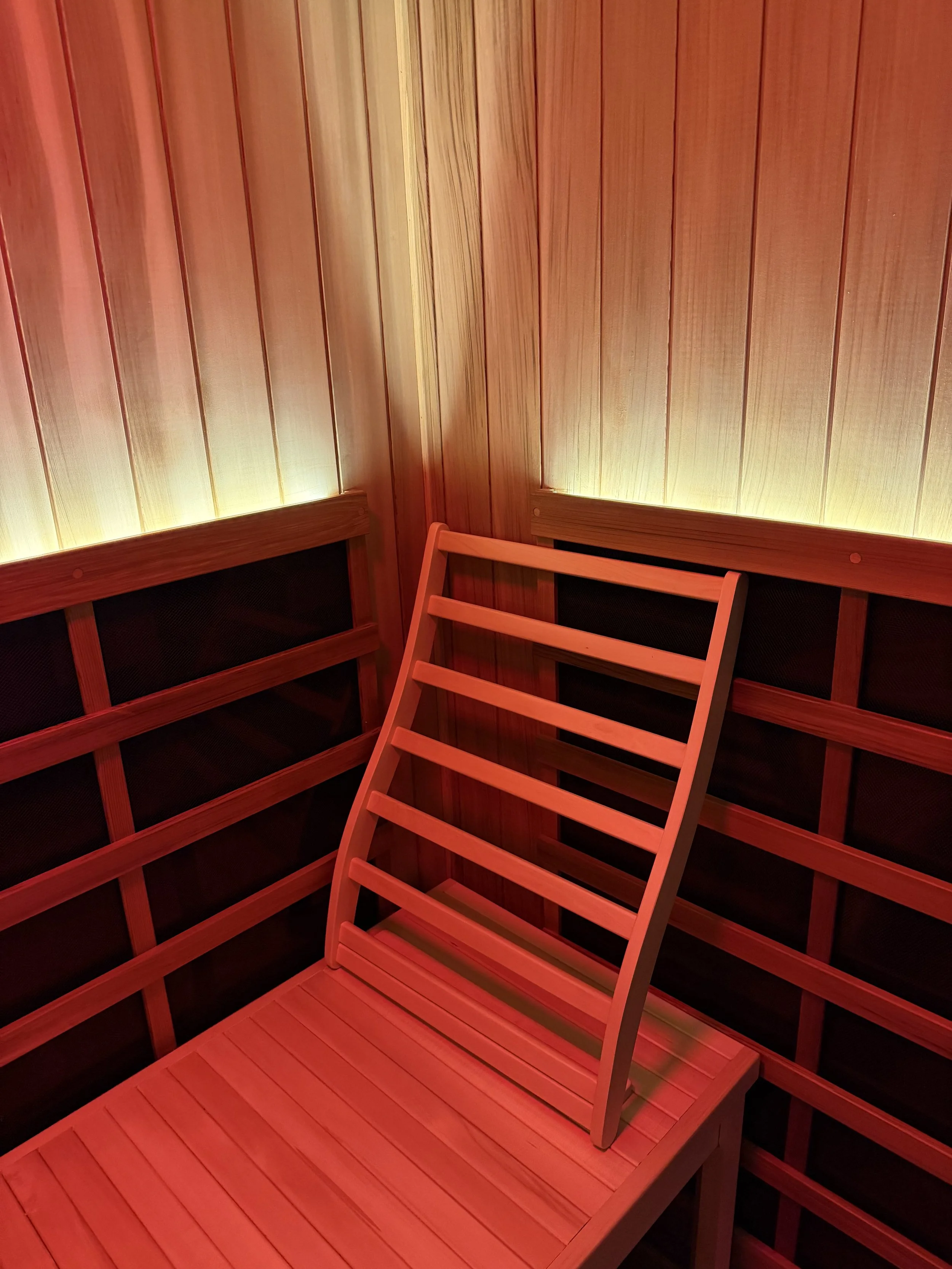
Infrared Sauna at Revive Jindabyne
2. Temperature and Environment
If you struggle with heavy air or find it hard to breathe in intense heat, this will be a deciding factor.
Traditional: Operates at 70°C – 100°C. The humidity is adjustable by pouring water over hot rocks. This steam can help clear sinuses and improve lung function. It is a high-intensity, sensory experience.
Infrared: Operates at a milder 45°C – 60°C. The environment is very dry and focused on relaxation. Interestingly, some studies suggest that infrared sweat contains a higher concentration of heavy metals and toxins, as the radiant heat mobilises fat cells where these toxins are often stored.
3. The Sweat Factor
Traditional: You will sweat almost immediately because the air is so hot. It feels like a surface-level, cleansing sweat. Athletes often use this to expand blood plasma volume, which improves cooling efficiency and endurance for future workouts.
Infrared: It takes a bit longer to start sweating, but the sweat is often more profuse once it starts. Because the heat penetrates deeper into the muscle, it is excellent for recovery. Research suggests infrared waves help reduce delayed onset muscle soreness (DOMS) and speed up neuromuscular recovery after heavy lifting.
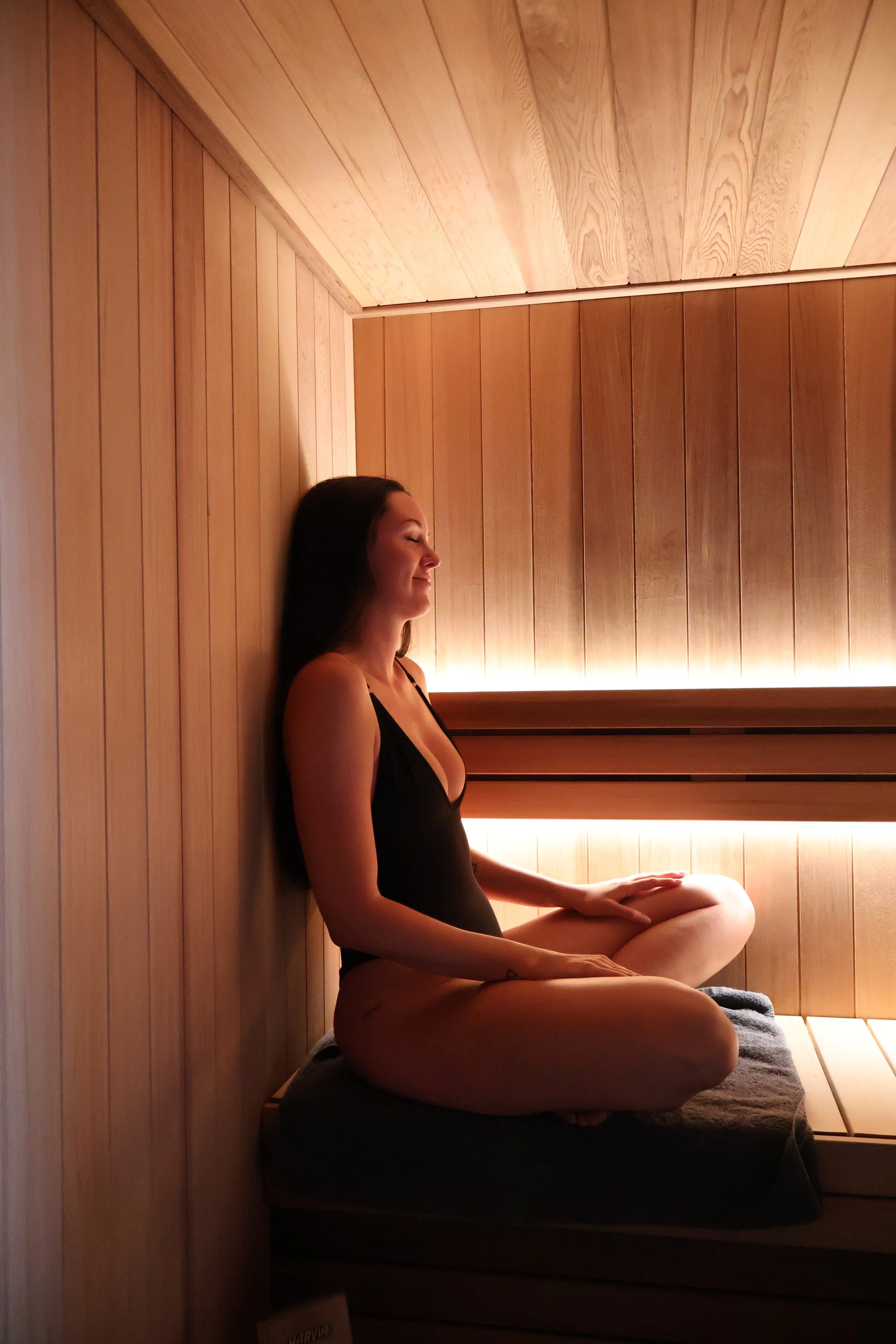
Traditional Sauna at Revive Jindabyne
Deciding What’s for You
Choosing between a traditional and an infrared sauna ultimately comes down to your personal health goals and how you prefer to experience the heat. If you crave the high-intensity, ritualistic blast of steam and want to maximise cardiovascular conditioning, the traditional Finnish route is likely your best match. On the other hand, if you prefer a gentler, more accessible session focused on deep tissue recovery and skin health, an infrared sauna offers a modern, efficient alternative.
However, because heat therapy can significantly impact heart rate and blood pressure, it is important to remember that any individual seeking specific advice regarding medical benefits and considerations should consult their medical practitioner for advice before beginning a new sauna regimen.